
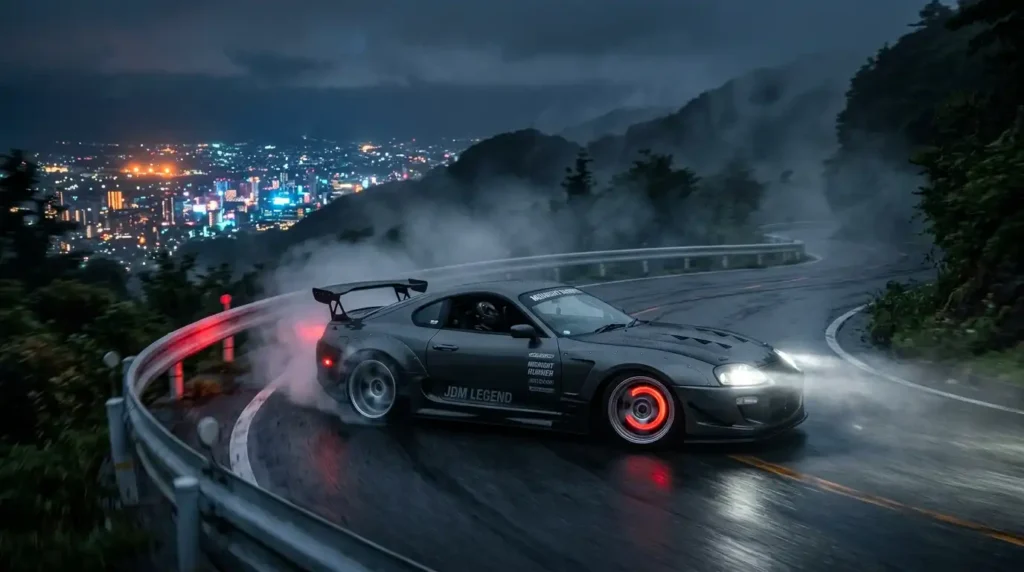
Long before dedicated time attack events, drift series, and modern circuit racing swept across the continent, Asia’s high-performance automotive culture was born under the cover of night. From the winding mountain passes of Japan to the multi-lane expressways of Southeast Asia, underground street racing provided the testing ground for a generation of drivers, tuners, and automotive engineers.
Over the past four decades, this clandestine subculture has undergone a dramatic transformation. What began as dangerous, unsanctioned speed runs on public roads has evolved into a disciplined, professional motorsport ecosystem. Understanding Asian street racing culture requires examining how local geography, engineering ingenuity, and strict law enforcement pushed underground racers off the streets and onto world-class race circuits.
1. The Origins: Midnight Expressways and Mountain Touge
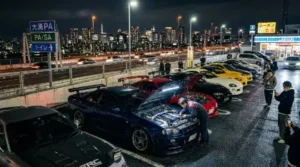
The story of Asian street racing began in post-war Japan during the late 1970s and early 1980s. Two distinct disciplines emerged based on local geography: Mid-Night highway runs and mountain Tōge racing.
On the elevated bypasses of Tokyo’s Shuto Expressway network—most notably the Bayshore Route (Wangan)—underground clubs pushed turbocharged sports cars past the 300 km/h (186 mph) threshold. These high-speed runs demanded extreme engine output, aerodynamic stability, and flawless mechanical reliability. Simultaneously, in the mountainous regions of Gunma, Nagano, and Tochigi, drivers gathered on narrow, twisting public mountain roads known as touge. Here, raw horsepower took a backseat to chassis setup, tire grip, weight distribution, and precise driver input.
This dual heritage quickly spread across Southeast Asia. In cities like Bangkok, Kuala Lumpur, and Manila, urban highway grids and peripheral bypass roads became unofficial drag strips for local automotive enthusiasts testing custom-built street machines.
2. The Street-Tuned Icons
The golden era of Asian street racing coincided with the rise of technologically advanced Japanese performance vehicles during the late 1980s and 1990s. These platforms were built with over-engineered components that made them ideal candidates for aftermarket tuning.
Several vehicles became iconic street weapons across the region:
- The All-Wheel-Drive Heavyweights: The Nissan Skyline GT-R (BNR32/BCNR33/BNR34) and Mitsubishi Lancer Evolution series provided relentless traction and twin-turbocharged power delivery.
- Lightweight Front-Wheel-Drive Hatchbacks: Honda Civics equipped with high-revving VTEC engines offered exceptional power-to-weight ratios on tight, technical routes.
- Balanced Rear-Wheel-Drive Coupes: The Mazda RX-7, Toyota Supra, and Nissan Silvia provided agile chassis balance essential for high-speed cornering and controlled drifting.
Underground tuners modified stock engines with oversized turbochargers, upgraded intercoolers, standalone engine management systems, and aggressive suspension upgrades, pioneering aftermarket performance techniques that remain industry standards today.
3. Public Safety, Law Enforcement, and Structural Crackdowns
While the romanticized image of underground street racing gained global popularity through cinema and media, the reality on public roads carried severe risks. Unsanctioned high-speed driving presented inherent safety hazards to non-participating motorists and public infrastructure.
By the late 1990s and early 2000s, law enforcement agencies across Asia implemented comprehensive enforcement initiatives. Authorities utilized automated speed enforcement cameras, heavy highway patrols, vehicle impoundments, and strict vehicle modification regulations. Transport authorities worked alongside international safety organizations such as the Fédération Internationale de l’Automobile to promote road safety and curb illegal street racing activities.
With public roads heavily monitored and penalties steepening, the underground racing community faced a choice: adapt or disappear.
4. The Great Migration: Transitioning to Sanctioned Tracks
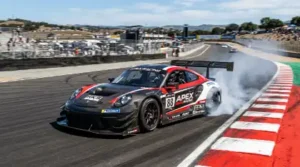
Rather than destroying the car culture, law enforcement crackdowns accelerated a necessary shift toward legal motorsport venues. Organizers, tuners, and drivers recognized that controlled circuit environments offered a safer, more competitive platform to push vehicles to their absolute limits.
Former street racers redirected their energy toward structured time attack competitions, amateur track days, and drifting championships. Renowned circuits such as Tsukuba Circuit and Fuji Speedway in Japan, Sepang International Circuit in Malaysia, and Chang International Circuit in Thailand became the new epicenters of performance testing.
This migration transformed street-tuning shops into respected racing outfits. Technical innovations developed on public roads were refined using telemetry, professional driver feedback, and wind-tunnel testing to create dedicated track cars capable of setting record lap times.
5. Economic Impact and Global Automotive Influence
The evolution from illegal street racing to circuit motorsport helped establish a multi-billion-dollar global aftermarket automotive industry. Parts manufacturers, suspension builders, and tuning houses that originated in small Japanese and Southeast Asian workshops expanded globally.
Today, consumer safety standards, emissions compliance, and vehicle trade regulations are monitored by government agencies such as the International Trade Administration, ensuring that performance components meet rigorous global manufacturing standards before reaching retail consumers.
Final Thoughts: The Legacy of Asia’s Street Racing Culture
Asian street racing culture has come a long way from its clandestine midnight origins. While the era of unsanctioned highway speed runs and mountain touge battles has largely faded into history, its spirit lives on in modern motorsports. By moving off public roads and onto professional race tracks, Asian car culture transformed an underground passion into a respected, safe, and world-renowned automotive discipline.