
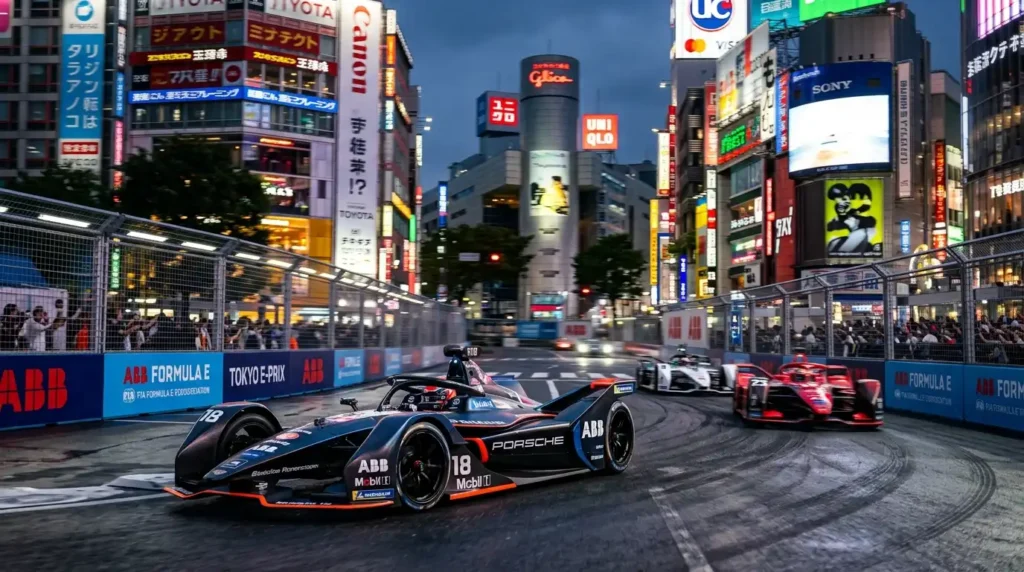
Asia is the global epicenter of electric vehicle adoption, home to leading battery manufacturers, innovative EV original equipment manufacturers (OEMs), and massive urban populations transitioning away from internal combustion engines. This article explores how urban circuit racing pushes electric powertrain limits, refines energy software, and speeds up the arrival of durable, high-efficiency EVs across Asian highways.
The Extreme Laboratory of Asian Street Circuits
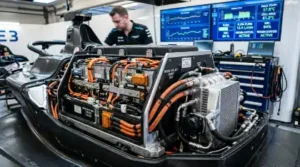 Unlike traditional racing series that operate on expansive, purpose-built permanent tracks, Formula E brings electric motorsport directly into dense urban centers. Asian street circuits present a unique set of engineering hurdles that reflect real-world driving environments:
- Bump and Surface Variability: Public city streets in Asia feature asphalt changes, manhole covers, uneven paving, and elevated road camber, forcing suspension systems and electric drivetrains to handle unpredictable vibration and traction loss.
- Tight Corners and Heavy Braking: Stop-and-go street layouts require frequent hard deceleration followed by immediate maximum torque demands, creating extreme thermal stress on electric motors and battery cells.
- Tropical and Humid Climates: Racing in humid, high-temperature conditions across Southeast and East Asia puts thermal management systems to the test, offering vital operational data for consumer EVs driven in hot climates.
Because these conditions mirror urban traffic challenges, race engineers can analyze data collected during a 45-minute sprint race to improve consumer EV reliability under tough road conditions.
1. Regenerative Braking and Energy Efficiency Software
In modern Formula E racing, finishing a race is not just about driving fast—it is about managing energy with extreme precision. Race cars are allowed a limited amount of usable battery energy per race, requiring drivers to regenerate up to 40% of their total energy during heavy braking events.
This challenge has sparked rapid advancements in software algorithms and rear brake-by-wire systems. Race engineers write complex predictive energy management software that optimizes when energy should be drawn or harvested back into the battery. Today, major Asian automakers active in the series—such as Nissan and Hyundai—are porting these software lessons into production vehicles. You can explore the official championship details directly on the ABB FIA Formula E World Championship Website.
By applying race-tested regenerative braking logic to consumer EV software, passenger cars achieve greater real-world range without adding heavier, more expensive battery packs.
2. Battery Thermal Management in Hot Climates
One of the largest obstacles to consumer EV adoption in warmer Asian markets is thermal degradation. High temperatures reduce battery charging speeds, degrade long-term battery health, and limit high-performance acceleration output.
During urban street races, Formula E batteries experience rapid charge and discharge cycles in high ambient temperatures. To keep performance stable, teams develop advanced liquid cooling channels, immersion cooling techniques, and phase-change materials that regulate cell temperature under heavy usage.
As these thermal management innovations trickle down to commercial production, everyday electric cars can maintain faster DC fast-charging rates and retain longer total lifespan, even when parked in hot tropical environments.
3. High-Density Silicon Carbide Inverters and Power Electronics
The inverter acts as the brain of an electric powertrain, converting direct current (DC) from the battery into alternating current (AC) for the electric motor. In early-generation EVs, bulky inverters created heat losses and added weight.
Formula E’s competitive environment forced a shift toward Silicon Carbide (SiC) semiconductors. SiC inverters operate at much higher frequencies and efficiency levels while occupying significantly less space and weight. Today, Asian semiconductor manufacturers and automotive suppliers use Formula E testing data to mass-produce compact, high-efficiency SiC power modules for mainstream road cars, resulting in lighter vehicles with greater driving range.
Formula E Race Tech vs. Asian Consumer EV Tech
The table below summarizes how specific racing innovations directly influence everyday electric road cars across Asia:
| Track Technology | Race Track Application | Consumer Road Car Benefit |
|---|---|---|
| Dual-Motor Regen Systems | Harvests up to 600kW of kinetic energy during deceleration. | Extended urban driving range and longer brake pad life. |
| Silicon Carbide (SiC) Inverters | High-frequency, lightweight power conversion with minimal heat loss. | Smaller engine bay components and higher overall powertrain efficiency. |
| Advanced Immersion Cooling | Prevents battery overheating during high-power sprint racing. | Sustained fast-charging speeds and enhanced battery longevity in hot weather. |
| Ultra-Fast Flash Charging | In-race high-power pit stop charging bursts. | Faster 10-to-80% public charging times at highway stations. |
Driving Consumer Awareness Across Asia
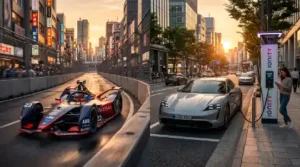 Beyond engineering breakthroughs, Formula E serves as a powerful marketing tool that demystifies electric vehicles for millions of Asian consumers. Hosting races on familiar city streets demonstrates that electric cars are durable, fast, and exciting to watch.
As Asian municipal governments implement zero-emission zones and incentivize electric transport, urban racing provides a public platform that reinforces the practicality of EVs. Spectators see high-speed electric cars handle sharp turns, bumpy asphalt, and rain-soaked tracks, helping reduce range anxiety and build trust in consumer EV technology.
Conclusion: The Fast Track to Green Mobility
Formula E in Asia is far more than a sporting spectacle. By bringing electric racing into the heart of Asia’s largest urban centers, the championship acts as a real-world testing ground for tomorrow’s electric cars. From software algorithms that stretch every kilowatt of power to high-efficiency inverters and heat-resistant battery cooling, the lessons learned on Asian street circuits are helping build better, safer, and more affordable EVs for drivers across the continent.