
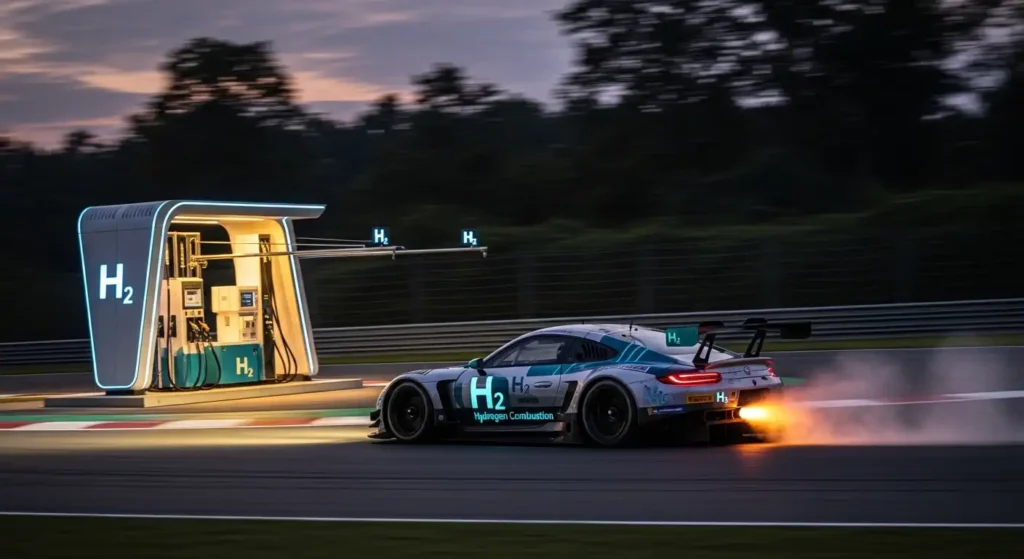
For the past decade, the “green” transition in motorsports felt like a binary choice: cling to the fading roar of fossil fuels or embrace the silent, high-torque hum of battery electric vehicles (BEVs). But as we cross into the 2026 racing season, a third contender has roared onto the scene in the Asia-Pacific region. The Hydrogen GT racing Asia 2026 movement is proving that sustainability doesn’t have to mean silence.
Led by industry giants like Toyota and the HySE (Hydrogen Small mobility & Engine technology) consortium, 2026 has become the tipping point for Hydrogen Internal Combustion Engines (HICE). While Formula E continues to dominate the urban electric circuit, the world of endurance and GT racing in Asia is looking toward hydrogen as the key to preserving the visceral, mechanical soul of the sport while achieving carbon neutrality.
The Sound of Sustainability: Why HICE Wins Fans
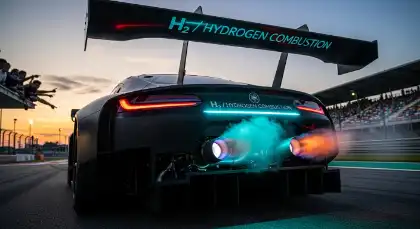
One of the primary criticisms of electric racing has always been the lack of sensory engagement. For the Asian fanbase, the vibration and auditory “scream” of a high-revving engine are inseparable from the racing experience. Hydrogen combustion engines (HICE) solve this by burning hydrogen in a traditional piston-based architecture.
In 2026, we are seeing the results of years of testing in the Japanese Super Taikyu series. These engines produce essentially zero CO2, yet they retain the intake growl and exhaust note that fans demand. At the 2026 Tokyo Auto Salon, manufacturers showcased flagship prototypes, including the GR GT3, which integrates advanced hybrid-hydrogen systems, signaling a future where the grandstands still shake—but without the carbon footprint.
The “Hydrogen Corridor”: Infrastructure Meets Competition
The success of hydrogen GT racing in Asia during 2026 isn’t just about the cars; it’s about the “Hydrogen Corridor.” This year, a strategic partnership between Thailand and Malaysia has seen the installation of high-speed liquid hydrogen refueling stations at major tracks like Sepang and Buriram.
- Refueling Speed: Unlike BEVs that require lengthy charging pit stops, a 2026 Hydrogen GT car can refuel in under 90 seconds—comparable to traditional gasoline stops.
- Regional Collaboration: Petronas and several Japanese energy firms are co-developing a “Green Hydrogen” supply chain specifically for the Southeast Asian racing circuit, ensuring the fuel used on-track is as sustainable as the technology.
- Heat Management: 2026 has seen breakthroughs in liquid hydrogen storage tanks that can withstand the extreme humidity and track temperatures of Southeast Asia without “boil-off” issues.
Extreme H and the Global Stage
While regional GT racing is focusing on combustion, 2026 also marks the inaugural season of Extreme H, the world’s first FIA-recognized hydrogen world championship. While Extreme H uses fuel-cell technology (turning hydrogen into electricity) rather than combustion, its presence in Asian markets—including rumored rounds in Saudi Arabia and potentially East Asia—is normalizing hydrogen as a top-tier racing fuel.
This dual approach—fuel cells for off-road efficiency and combustion for GT performance—is creating a robust ecosystem for hydrogen technology that was unthinkable just five years ago.
Technical Challenges: The Road to 2027
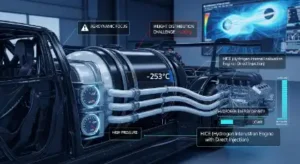 Despite the excitement of 2026, the transition isn’t without hurdles. Hydrogen’s low energy density compared to gasoline requires larger, heavier tanks, which challenges the “low center of gravity” philosophy of GT3 racing. However, the 2026 prototypes have introduced Direct Injection (DI) technology as the industry standard, mitigating the power loss typically associated with hydrogen and allowing these cars to keep pace with traditional GT3 machines.
Conclusion: A New Era for Auto Sport Asia
Is hydrogen the savior of Asian GT racing? In 2026, the answer appears to be a resounding “Yes.” By bridging the gap between the mechanical heritage of the internal combustion engine and the urgent need for zero emissions, hydrogen is carving out a permanent place on the grid. As we look toward the 2027 season, the “Hydrogen GT” is no longer an experiment—it is the leading edge of Asian motorsport innovation.
At Auto Sport Asia, we will continue to bring you exclusive technical deep-dives and trackside reports as this technology evolves from the laboratory to the podium.
Join the Discussion
Do you prefer the silent torque of electric racing or the roar of hydrogen combustion? Let us know in the comments below, and stay tuned for our upcoming feature on the 2026 Hydrogen GT refueling technology!