
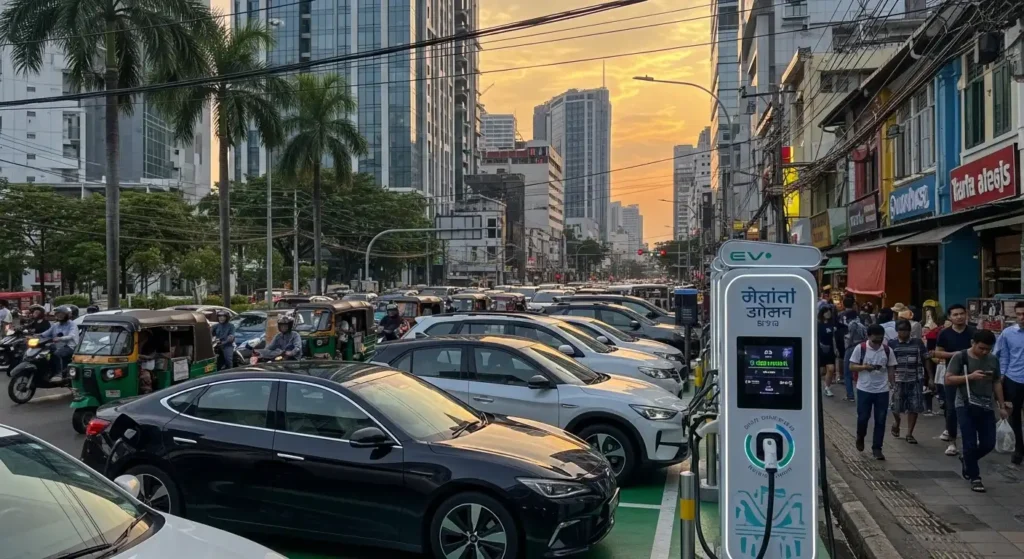
Electric vehicles (EVs) are no longer a future concept in Asia — they’re a present-day reality reshaping the automotive landscape. From major markets like China to rapidly growing regions such as Southeast Asia and India, EV adoption is accelerating faster than many analysts expected.
Understanding the dynamics of this shift — including key opportunities, challenges, and what it means for drivers — is important for anyone interested in buying a car, investing in the auto sector, or following automotive innovation in 2026.
Why Asia Is Leading Global EV Growth
 Asia is emerging as the dominant region in electric vehicle adoption. Several factors are driving this trend:
- Government policies and incentives — Asian governments are actively encouraging EV adoption with subsidies, tax breaks, and strict emissions standards.
- Manufacturing scale — countries like China and Thailand are major production hubs for EVs and related components.
- Growing middle class — rising incomes and changing consumer preferences are pushing demand for modern, efficient vehicles.
- Environmental concerns — air quality issues in many Asian megacities make EVs an attractive long-term choice.
According to industry research, Asia could account for over 60% of global EV sales over the next several years, with markets like China and Southeast Asia leading the charge.
China’s Dominance in EV Production and Sales
No discussion of Asia’s EV expansion is complete without mentioning China. The country has been a global leader in EV adoption for years, with local brands such as BYD, NIO, and XPeng rapidly expanding their reach. China’s large domestic market, strong manufacturing base, and supportive regulations make it a central player in the global EV race.
This leadership isn’t just about volume — it’s about innovation and pricing. Chinese automakers produce a wide range of EVs, from affordable city cars to premium electric SUVs, helping to make EV ownership accessible to more consumers.
Southeast Asia: A Key Growth Frontier
Southeast Asia is quickly becoming another major hotspot for EV growth. Countries like Indonesia, Thailand, Vietnam, and Malaysia are adopting EV manufacturing strategies and infrastructure investments.
With rising incomes and increasing urbanization, demand for efficient, environmentally friendly vehicles is expected to surge. EV infrastructure investments — such as charging stations and grid upgrades — are underway across the region to support this shift.
India’s Rising EV Potential
India’s EV market is currently smaller than China’s, but it’s growing quickly. Government incentives and a strong focus on two- and three-wheeler electrification are pushing electric mobility beyond major metro areas.
Despite affordability challenges, India’s EV ecosystem — including investment in battery technology and charging infrastructure — is expected to expand significantly throughout 2026 and beyond.
Charging Infrastructure and Accessibility
One of the biggest challenges for EV adoption across Asia is charging infrastructure. Governments and private companies are investing heavily in public charging networks — especially in urban centers — to support the growing number of EVs on the road.
However, charging accessibility varies widely across regions. Urban areas tend to have better networks, while rural or less developed regions still lag behind. This uneven rollout is something prospective EV buyers should consider before making the switch.
What Drivers Should Know Before Buying an EV in Asia
If you’re considering an electric vehicle in 2026, here are key factors to keep in mind:
- Range and daily needs — Ensure the EV’s range fits your typical driving patterns and doesn’t lead to range anxiety.
- Charging access — Research the availability of charging stations in your city and along routes you commonly travel.
- Battery technology — Battery advancements are rapidly improving range and performance, but prices and technology differ by manufacturer.
- Government incentives — Subsidies and tax breaks can make EVs more affordable, so check local policies.
- Total cost of ownership — Consider fuel savings, maintenance costs, and resale value over several years.
Impact on the Automotive Industry in Asia
 Asia’s EV boom is reshaping carmakers’ strategies and global competition. Manufacturers are investing heavily in EV models, building new production facilities, and forming strategic partnerships to stay ahead.
Studies show that BEVs (battery electric vehicles) are projected to lead the global electric car market in 2026, with segments like 150–300 mile range vehicles expected to dominate due to a balance of cost and usability.
With Asia’s rapid growth and a massive consumer base, the region is poised to remain at the forefront of automotive innovation for years to come.
Conclusion
The growth of Asia’s electric vehicle market in 2026 is one of the defining trends in the global automotive sector. From China’s market leadership to Southeast Asia’s rising adoption and India’s potential, the future of electric mobility in Asia is both promising and transformative.
For drivers across the region, understanding these trends — and their implications for vehicle choice, infrastructure access, and ownership costs — is essential before making an EV decision.
Looking for more insights on the future of cars and automotive trends? Check out our other posts at AutoSportAsia for reviews, EV comparisons, and market analysis.